We undertake research to evidence the impact and value of youth work within the youth ecosystem, to inform best practice, policy and commissioning decisions and help make the case for investment.
We also evaluate our own work to demonstrate what we are achieving in line with our strategic goals.
Higher Education Institutions – Annual Monitoring Report 2024/25
This report highlights the main findings from the National Youth Agency’s (NYA) Annual Monitoring survey, which higher education institutions (HEIs) are required to complete, as detailed in the NYA’s Professional Validation Requirements.
The data collected helps the NYA’s Education and Training Standards (ETS) Committee to maintain a clear picture of the professional youth work training landscape in England, supporting the development of its strategy. Data is also used by the NYA to inform its youth workforce strategy and by HEIs in the development of their own youth work courses.
Youth Work and Violence Prevention Guidance
The NYA has conducted supported research with academic and sector partners to explore the role of youth workers in safeguarding young people at risk of violence and criminal exploitation, and the impact of open access youth clubs on violence prevention. In January 2026 the Youth Endowment Fun published its Youth Work and Violence Prevention Guidance to evidence where youth workers support better outcomes for young people and to help shape commissioning and funding decisions.

Review of youth workers’ role in safeguarding children and young people at risk of or involved in violence
The review involved a survey of 300 youth workers in England and Wales and found that nearly three-quarters (73%) had provided informal mentoring to young people at risk of violence or crime, and two-thirds (65%) had de-escalated situations that could have led to violence. More than half (55%) had tackled misinformation that might otherwise have fuelled crime or conflict.
Review of youth clubs’ role in supporting children at risk of or involved in violence
The review examined how youth clubs are set up and operated, what encourages at-risk children to attend and engage, what kinds of support are offered, and what changes to policy and practice could strengthen their contribution to violence prevention.
The research found that a substantial proportion of youth club staff reported direct involvement in helping children exit gangs (39%) or deescalating situations that could otherwise have escalated into violence (40%).

The National Youth Sector Census 2025 Summer Snapshot Report
The National Youth Sector Census remains the most comprehensive annual overview of youth work in England. The 2025 Census draws on responses from over 1,000 organisations, revealing a sector under significant pressure but delivering vital support to young people nationwide.
Lifting young people up through youth work: Reducing violence affecting young people and driving positive outcomes for all young people through youth work.
Lifting young people up through youth work: Reducing violence affecting young people and driving positive outcomes for all young people through youth work. The Lifting young people up through youth work policy report summarises insights from the National Youth Agency (NYA) and Youth Endowment Fund (YEF) Annual Youth Work Conference held in March 2025. The conference focused on strategies to reduce violence affecting young people and promote positive outcomes through youth work. The event brought together sector stakeholders, national and …
What the Future Holds: National Youth Agency recommendations report for a new National Youth Council for the UK
In May 2024, the National Youth Agency purchased the remaining assets and began investing resources into a UK-wide listening exercise and review to explore potential solutions for reinstating a sustainable and long-term future for national youth councils. This effort includes support for the remaining operational elements of the organisation related to the UK Young Ambassador (UKYA) programmes.
Digital Youth Work: Skills, Knowledge and delivery in the sector
This document presents findings from National Youth Agency (NYA) research funded by the Fusion21 Foundation. The research took place between October 2024 and March 2025. The research explores the delivery of digital youth work by youth workers and youth sector organisations.
Higher Education Institutions Monitoring Report for 2023/24
The NYA’ 2025 Annual Monitoring Survey of Higher Education Institutions (HEIs) highlights the changing university landscape. Most significantly, it shows that seven new apprenticeships degree programmes were launched in 2023/24, giving an uplift of 15% on student numbers since the previous year driven by the addition of 149 apprentices.
Youth Work Job Search Briefing 2025
NYA’s research shows that youth work is now predominantly delivered through the voluntary sector (69%), yet there is a significant shortage of professionally trained practitioners. A lack of stable career pathways deters new entrants, further deepening the workforce crisis.
Viewed alongside NYA’s review of jobs advertised on key recruitment platforms in April and November 2004, and February 2025 the Workforce Survey evidences the urgent need for a pipeline of suitably qualified practitioners – which the NYA is addressing through its proposed changes to the qualifications framework.

Youth Sector Workforce Survey 2025
The 2025 Workforce Survey report paints a stark picture of rising demand for targeted support for young people – particularly in cases of those at risk of engaging in or being affected by serious violence – against the backdrop of a challenging recruitment landscape for youth work employers.
The report analyses responses from over 1,300 youth workers highlighting a critical shortage of trained youth workers, leading to missed opportunities for early intervention and prevention. Without sufficient youth work support, issues such as serious violence, poor mental health, and exploitation escalate, requiring more costly interventions later.
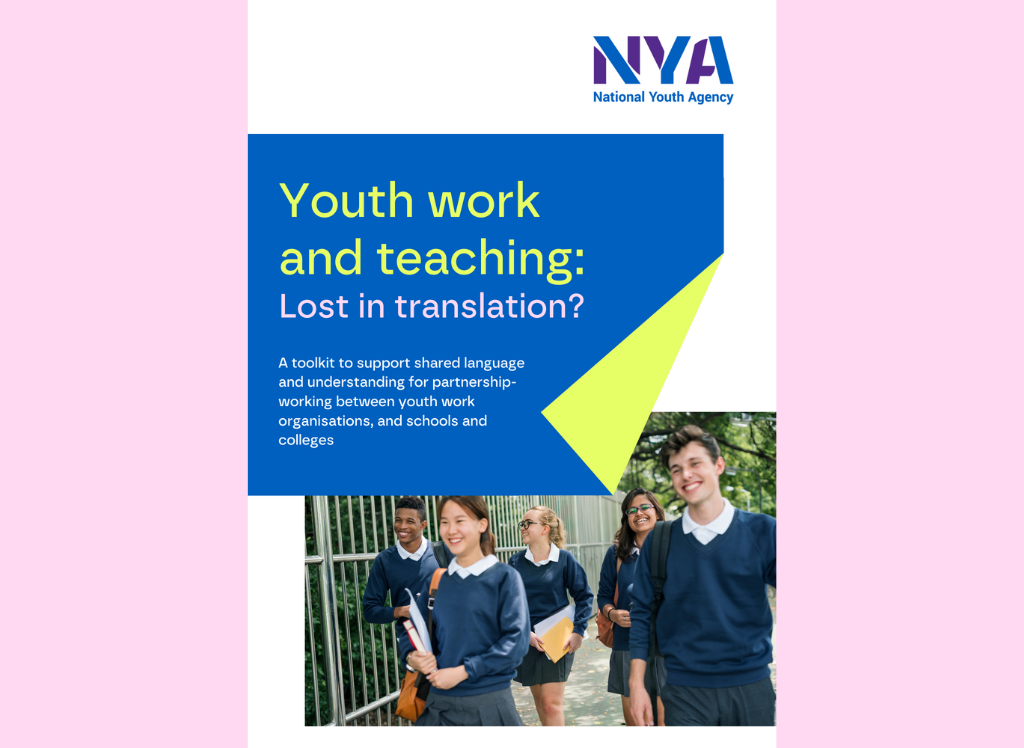
Youth work and teaching: Lost in Translation?
The National Youth Agency (NYA) has produced a toolkit to help strengthen collaboration between youth work organisations, and secondary schools and colleges in order improve pupil wellbeing, engagement with learning and support safeguarding. Youth work and teaching: Lost in translation? A toolkit to support shared language and understanding for partnership-working between youth work organisations, and schools and colleges is aimed at practitioners and those commissioning interventions for young people within schools, academy trusts and colleges.
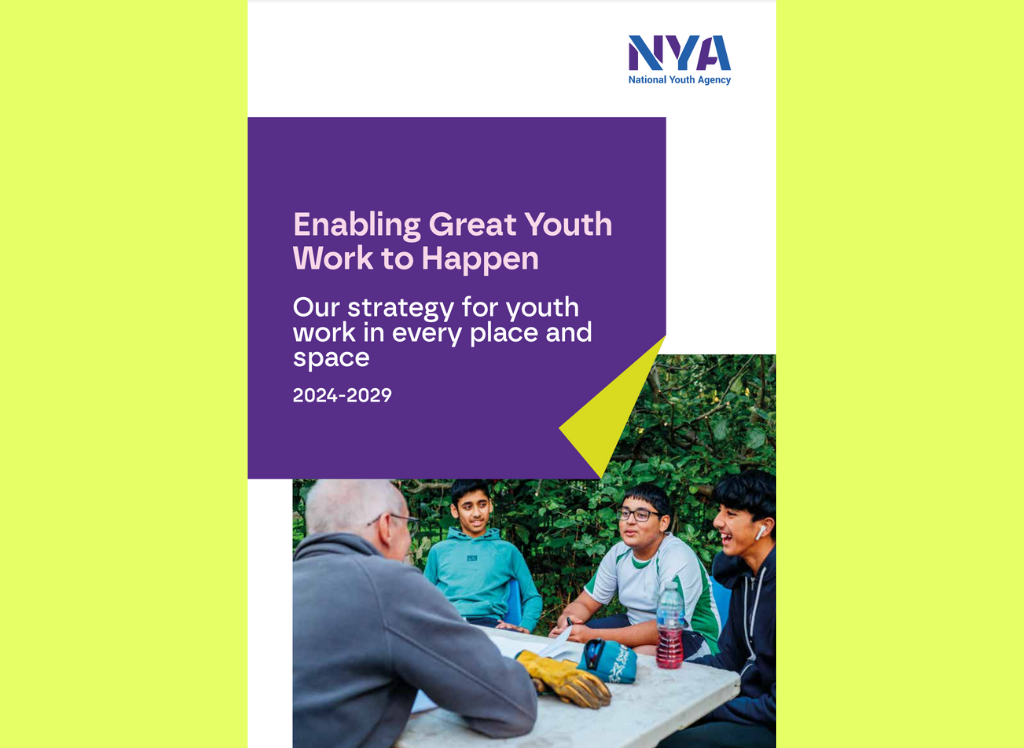
Enabling Great Youth Work to Happen – NYA Strategy for youth work in every place and space
Our new five-year strategy (2024 – 2029), Enabling Great Youth Work to Happen, Our strategy for youth work in every place and space, sets out our bold ambitions to build the capacity and sustainability of the youth work sector.
Over the next five years our strategic focus is on evidencing the value of youth work and seeking opportunities for youth work to take place in the places and spaces where young people are.
We will also be attracting new entrants to the sector and helping to raise the standards and quality of youth work.

National Youth Sector Census Snapshot, Summer 2024
The 2024 Snapshot report shows that there’s increasing demand for mental health support set against precarious finances of voluntary sector youth work providers.

Youth Sector Workforce Survey 2024 report
Research into the state of the youth sector workforce highlights a shortfall in qualified youth workers in England despite rising demand. The NYA conducted a survey of around 1000 youth workers in late 2023 and undertook focus groups to understand the current composition of the workforce, the motivations for pursuing a career in youth work and attitudes towards profession development to provide qualitative and quantitative data for policymakers and funders.

Capturing the Evidence
Tools and activities for evaluation and recording the impact of youth work.

The social cost of youth work cuts report
This report provides an analysis of 74 sources of academic literature and research evidence relating to the impact of youth work in the justice system.
Joining the Dots
The report came from an investigative consultation commissioned by the National Youth Agency (NYA) in 2022 to better understand the needs of grassroots youth organisations.

The National Youth Sector Advisory Board’s Roadmap to a National Youth Strategy
This Roadmap has been developed in consultation with youth sector experts and young people, setting out 15 policy recommendations for national government.
Youth Work in Private Dwellings: Safety first – no compromise
This important resource provides a useful reference for those commissioning youth work to ensure that their provision meets the optimum standards for safeguarding.

National Youth Sector Census – Snapshot Report 2023
This report provides an analysis of the data received from 920 youth work organisations between March 2022 and April 2023, providing a snapshot of the Sector.

Better Together: Youth Work with Schools report
The Better together: Youth work with schools report is the result of a call for evidence and a survey of schools and youth work organisations.

National Youth Sector Census: Report #2, Delivering Youth Work in England
Summary evidence of qualitative research from local authorities, youth and community organisations, young people, and analysis of secondary data.
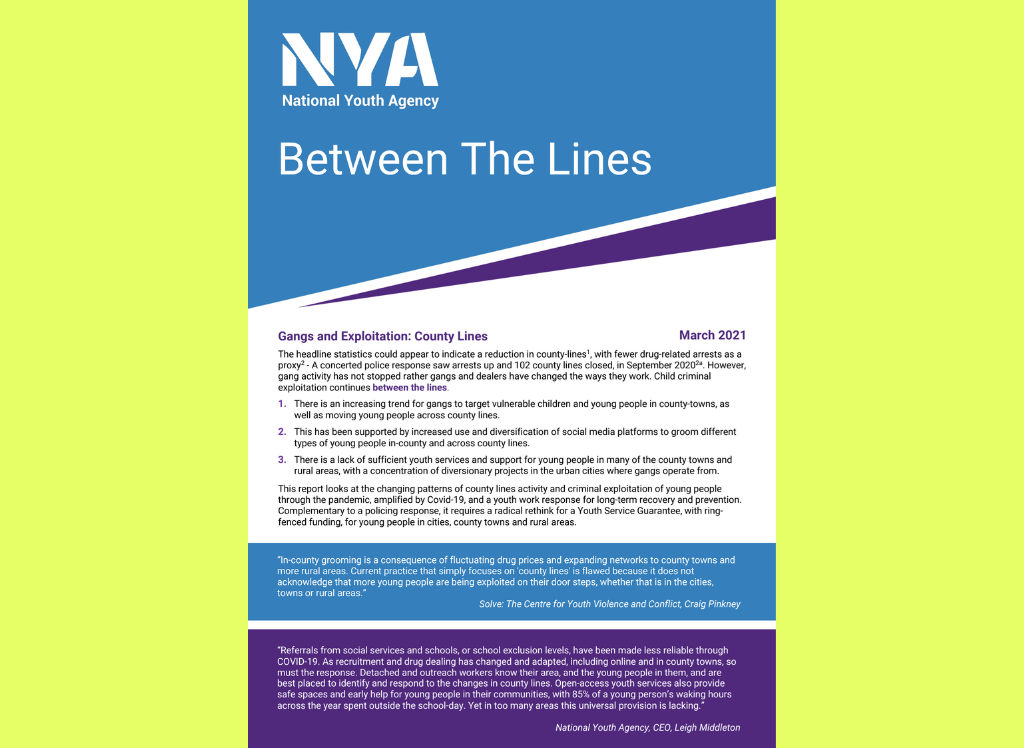
Between the Lines
Young people are being groomed locally – ‘on their door steps’ – as drug gangs and dealers adapt the way they work to exploit young people across county lines.
Keeping Young People in Sight: Designated Safeguarding Leads in the Youth Sector
This paper draws on the collective insight of the Designated Safeguarding Leads across the youth sector; primarily drawn from the nearly 300 members of the National Safeguarding Youth Forum.

Initial Summary of Findings from the National Youth Sector Census
An initial summary of the data that has been collected from over 25,000 organisations or sub-units of organisations from all parts of the sector and the country.
Time’s Running Out
NYA and YMCA’s joint report, Time’s Running Out, makes clear a national strategy is needed to secure youth services over the long term.
Overlooked: young people and rural youth services
There are vast gaps in local youth services. Hardest hit are the 2.2 million young people living in predominantly rural areas, living in villages, towns and coastal areas.
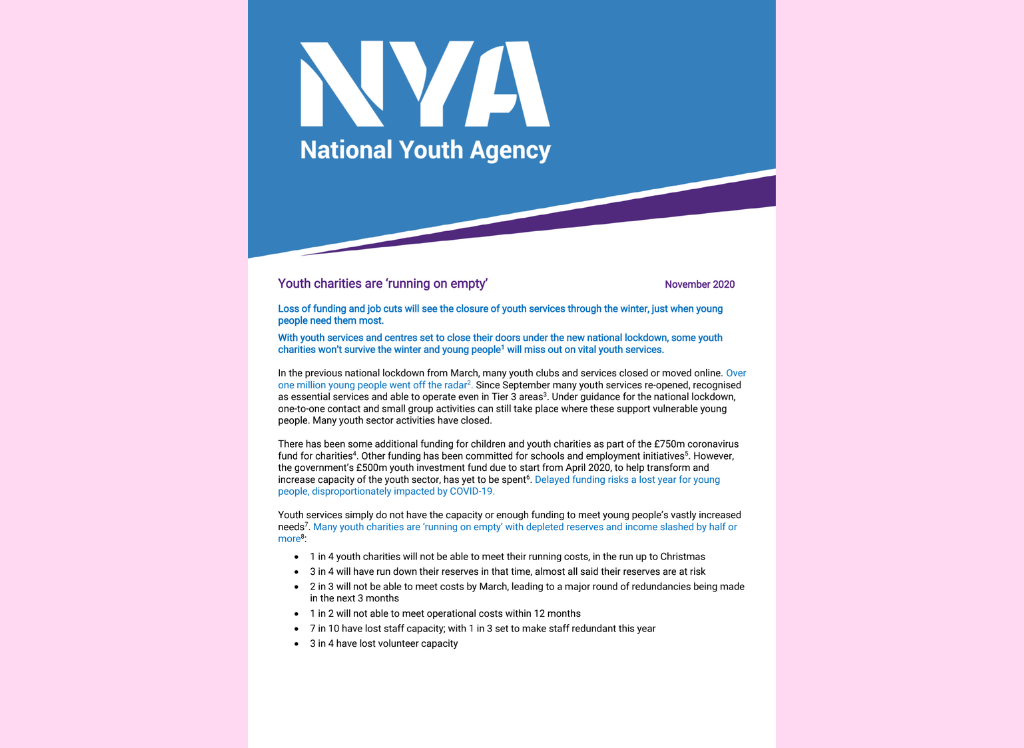
Youth charities are ‘running on empty’
While funding has been committed for schools and employment initiatives and some charities, delayed government funding for the youth sector has left many charities ‘running on empty’
Exploring the connection between social mobility and financial capability
This piece explores the idea that better financial capability can improve the social mobility of disadvantaged young people.

Responding to Youth Violence through Youth Work
Youth work practitioners and politicians alike are seeking answers to explain why in recent times violence is on the rise amongst young people.
Out of Sight: Vulnerable Young People: COVID-19 Response
This report highlights the scale and prevalence of young people’s needs that are amplified by the pandemic.
Hidden in Plain Sight – Gangs and Exploitation
This new report includes insight from the front line of youth workers on their increased concerns for street-gangs and organised criminal gangs.

Time Out: Re-Imagining Schools – COVID-19
This paper builds on the insights from the ‘Out of Sight?’ research report, on the known and emerging needs of young people through COVID-19.

Guidance for Local Authorities on Providing Youth Services
Our new guidance supports local authorities in their statutory duty to secure local services.
Outside, Looking In Employment Report
This paper builds on the insights from the ‘Out of Sight?’ research report, on the known and emerging needs of young people through COVID-19.
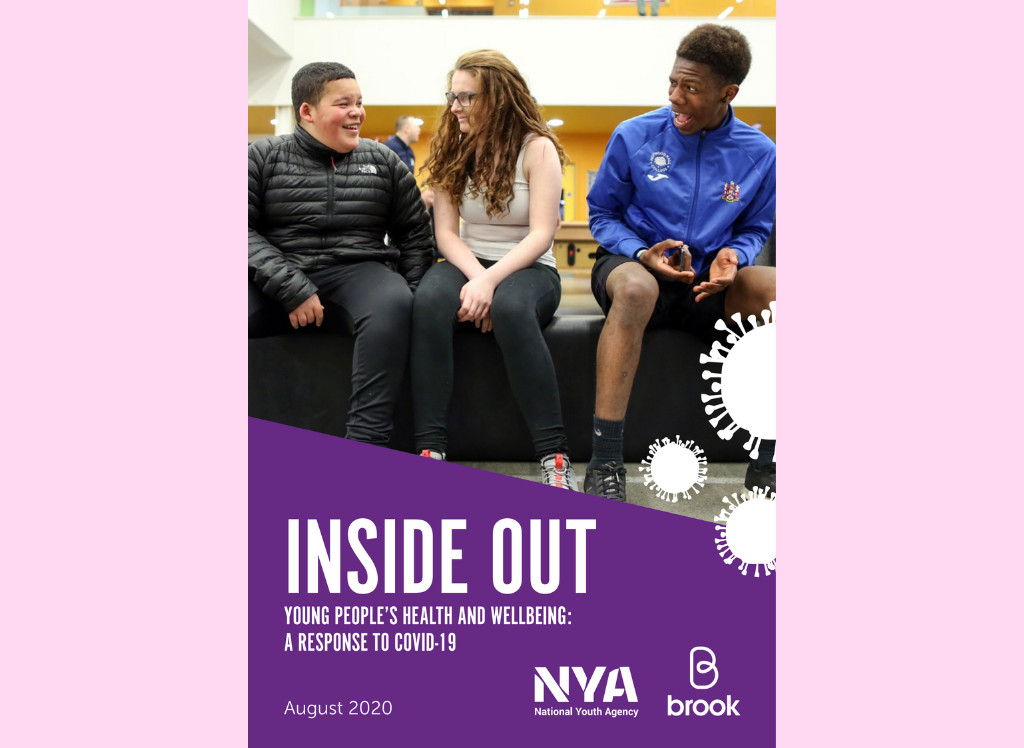
Inside Out NYA-Brook 2020
This paper builds on the insights from the ‘Out of Sight?’ research report, on the known and emerging needs of young people through COVID-19.
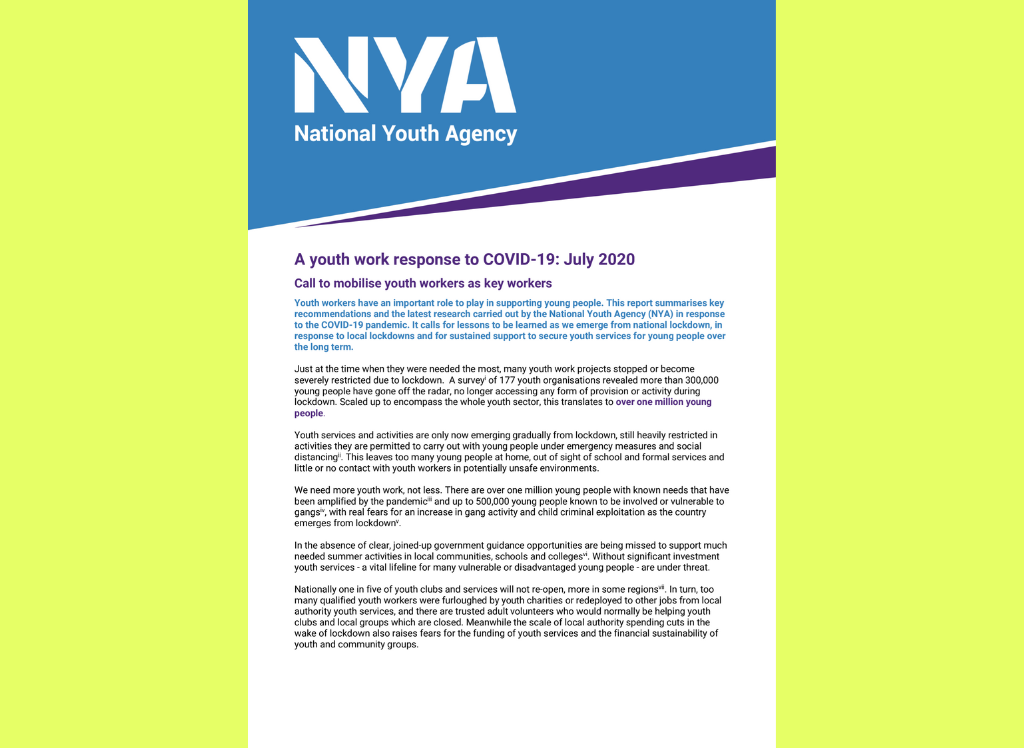
NYA COVID-19 Response July 2020
This report summarises key recommendations and the latest research carried out by the National Youth Agency (NYA) in response to the COVID-19 pandemic.

APPG Inquiry into Youth Work Report 2019
Over 100 pieces of evidence were submitted from youth work projects, young people and practitioners for this full national inquiry into youth work.
